
 See Our Latest Article on HelloNation

Golf is a full-body activity, not simply an arm movement. A successful swing depends on coordinated motion through the feet, hips, pelvis, spine, shoulders, and arms. When one area is stiff, weak, painful, or poorly controlled, another area may compensate.
For residents of New Castle, NY, chiropractic care may be one part of a broader plan for staying comfortable and physically prepared during the golf season. Its most useful role is usually not to “fix” a swing directly, but to help address musculoskeletal limitations that can affect movement, balance, and recovery.
Can chiropractic care improve a golfer’s performance?
Chiropractic care may support golf performance indirectly by improving comfortable joint movement, reducing certain types of musculoskeletal pain, and helping a golfer participate in mobility and strengthening exercises. It does not replace golf instruction, conditioning, or medical evaluation when symptoms are serious.
The golf swing requires rapid rotation and weight transfer. Limited hip mobility, reduced thoracic-spine movement, or discomfort in the lower back can make a golfer rotate excessively through the lumbar spine. Research reviews identify the lower back as a common site of golf-related injury and associate back symptoms with factors such as hip strength, trunk control, spinal motion, and swing mechanics. ([pmc.ncbi.nlm.nih.gov](https://pmc.ncbi.nlm.nih.gov/articles/PMC9219256/?utm_source=openai))
A chiropractic evaluation may consider:
- Spinal and joint mobility
- Hip and shoulder range of motion
- Muscle tightness or weakness
- Balance and coordination
- The way symptoms change during setup, rotation, and follow-through
- Everyday activities that may contribute to stiffness
The goal is to understand movement limitations rather than assume that every golf problem originates in the spine.
How might chiropractic care help with the golf swing?
A golfer who cannot comfortably rotate through the hips and upper back may shift more motion into the lower back or shoulders. This can affect posture, backswing depth, weight transfer, and the ability to finish the swing without discomfort.
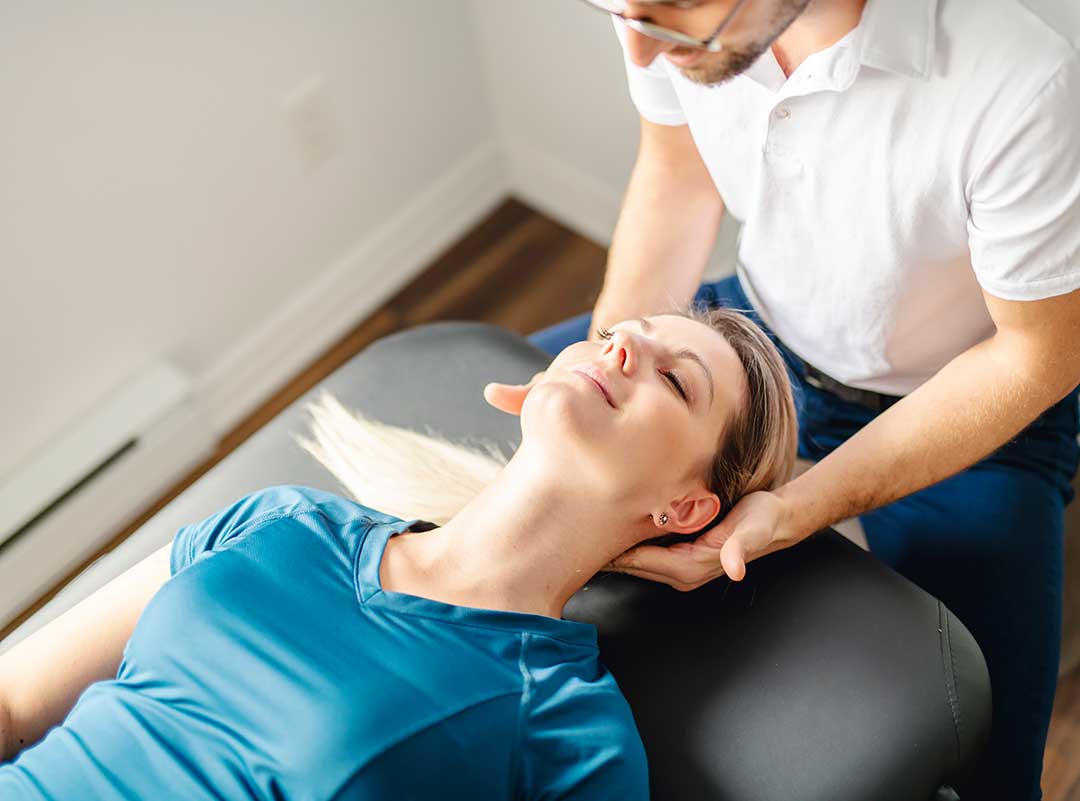
Chiropractic treatment may include manual therapy, joint mobilization, soft-tissue techniques, movement education, and exercise recommendations. Spinal manipulation is one treatment option that may provide mild-to-moderate relief for some people with low-back pain, although evidence does not show that it is uniquely superior to every other conservative approach. ([nccih.nih.gov](https://www.nccih.nih.gov/health/spinal-manipulation-what-you-need-to-know?utm_source=openai))
For a golfer, the practical benefit may be greater ease of movement. For example, reducing stiffness in the mid-back or improving hip motion may make it easier to maintain a balanced address position and rotate without forcing the lower back to do more than it should.
That improvement does not automatically increase clubhead speed or correct a technical flaw. A golf instructor is better positioned to evaluate grip, alignment, swing path, club selection, and sequencing.
What golf-related problems may respond to conservative care?
Chiropractic care may be considered for common musculoskeletal complaints such as:
- Mild or recurring low-back discomfort
- Stiffness after walking or riding a course
- Hip or pelvic-area tightness
- Limited upper-back rotation
- Neck or shoulder stiffness
- Muscle soreness after practice
- Discomfort that develops gradually rather than after a major injury
The approach should be based on the individual’s symptoms and health history. A golfer with persistent pain may need a coordinated plan involving exercise, physical therapy, medical care, or golf-swing modification.
Back pain in golfers is not always caused by one dramatic event. Repeated swings, extended practice sessions, carrying equipment, uneven terrain, and poor recovery can gradually increase irritation. Reviews of golf biomechanics describe the swing as a high-velocity movement that places substantial rotational and compressive demands on the body. ([pmc.ncbi.nlm.nih.gov](https://pmc.ncbi.nlm.nih.gov/articles/PMC4335481/?utm_source=openai))
Is an adjustment enough to prevent golf injuries?
Usually, no. An adjustment alone is unlikely to address every factor involved in golf-related pain or injury.
Injury prevention is more comprehensive. It may include:
- A gradual warm-up before hitting full shots
- Hip, thoracic-spine, and shoulder mobility work
- Strengthening the trunk, hips, and legs
- Practicing swing changes under qualified instruction
- Limiting sudden increases in bucket size or practice volume
- Taking recovery days when soreness persists
- Using a comfortable, controlled swing rather than forcing extra distance
This matters especially in spring, when local golfers may return to the course after spending much of the colder season less active. A golfer who begins with a full round or prolonged driving-range session may place more stress on muscles and joints than the body is prepared to manage.
A useful warm-up can begin with five to ten minutes of easy walking, followed by controlled movements such as bodyweight squats, hip hinges, torso rotations, shoulder circles, and practice swings. Stretching should not be aggressive or painful.
Can chiropractic care help golfers with back pain?
It may help some people, particularly when back pain is mechanical and responds to movement-based conservative treatment. However, the expected benefit is generally symptom relief and improved function—not a guarantee of longer drives, a lower handicap, or permanent correction.
A 2024 systematic review found that several golf-swing biomechanical variables may be associated with low-back pain, but the evidence remains complex and does not support reducing the problem to one posture or one swing feature. ([pubmed.ncbi.nlm.nih.gov](https://pubmed.ncbi.nlm.nih.gov/38446499/?utm_source=openai))
A balanced care plan may combine:
- Activity modification for a short period
- Gentle mobility exercises
- Progressive strengthening
- Manual therapy when appropriate
- Instruction on lifting, carrying, and practice habits
- Golf coaching if swing mechanics contribute to symptoms
Continuing to move within tolerable limits is often preferable to prolonged bed rest, but painful movements should not be repeatedly forced.
When should a golfer seek medical evaluation?
Some symptoms require more than routine musculoskeletal care. Prompt medical evaluation is appropriate for severe or rapidly worsening pain, significant weakness, loss of coordination, numbness that spreads, bowel or bladder changes, fever, unexplained weight loss, or pain following a substantial fall or collision.
A golfer should also seek evaluation when pain repeatedly returns, persists despite reduced activity, or prevents normal walking and daily tasks. Older adults and people with conditions such as osteoporosis, inflammatory arthritis, cancer history, or recent surgery may require additional precautions.
Chiropractic care is best viewed as one possible component of conservative musculoskeletal management. The most durable improvements usually depend on restoring useful movement, building strength, managing practice volume, and addressing swing or equipment issues when they contribute to overload.
What should golfers ask before beginning care?
Useful questions include:
- What movement limitation appears to be affecting my golf or daily activities?
- Which exercises should be performed between rounds?
- How should practice volume change while symptoms settle?
- What signs indicate that I should stop playing?
- Could another type of evaluation be more appropriate?
- How will progress be measured beyond temporary pain relief?
For local golfers, practical conditions also matter. Walking hilly or uneven terrain, carrying equipment, spending long periods in a bent setup position, and playing after a winter of reduced activity can all influence symptoms. Preparing the hips, trunk, and shoulders before the first full round may be as relevant as treatment after discomfort begins.
The clearest expectation is simple: chiropractic care may help a golfer move more comfortably and participate in a broader rehabilitation plan, but it is not a substitute for conditioning, sound instruction, sensible workload management, or medical care when warning signs are present.
